
 Cat Care
Why Are Cats Afraid of Cucumbers?
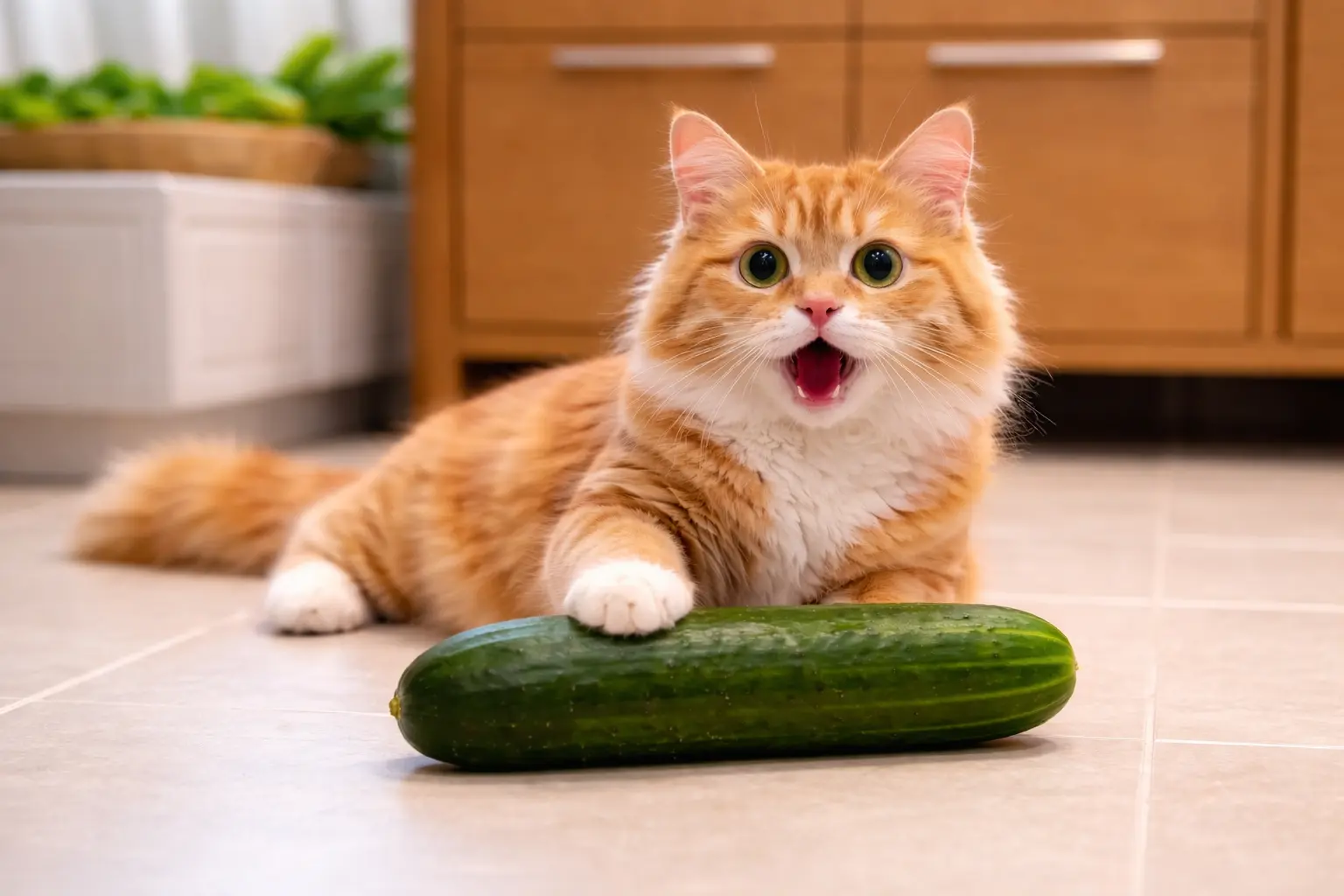
You’ve probably seen the videos: a cat calmly eating, turning around, and launching into the air at the sight of a cucumber behind them.
It looks funny.
It looks dramatic.
But to a cat behaviorist and veterinarian, it tells a very different story.
Cats are not afraid of cucumbers because they are cucumbers.
They react because of instinct, surprise, and perceived threat.
Let’s break it down.
The Real Reason: Sudden, Unexpected Objects Trigger Survival Mode
Cats are hard-wired ambush predators and also prey animals.
Their nervous system is designed to react fast to anything unfamiliar that appears suddenly in their environment.
When a cucumber is quietly placed behind a cat:
- · It appears suddenly
- · It was not there moments ago
- · It is long, unfamiliar, and oddly shaped
- · It is in the cat’s blind spot
The cat’s brain doesn’t have time to analyze.
Instead, it asks one question:
“Is this a threat?”
And it answers by triggering the startle reflex.
Is It Mistaken for a Snake?
Sometimes, but that’s not the main reason.
While cucumbers can loosely resemble snakes:
- · There is no evidence cats universally mistake cucumbers for snakes
- · Cats also jump at bananas, shoes, toys, or bags placed suddenly behind them
The key trigger is surprise, not resemblance.
What matters most is:
- · Sudden appearance
- · Unfamiliar object
- · No escape route
- · No time to investigate
Why the Reaction Looks So Extreme
Cats have an exceptionally sensitive fight-or-flight response.
When startled:
- · Adrenaline spikes instantly
- · Muscles contract explosively
- · The cat jumps before thinking
This is why reactions look exaggerated, cats evolved to escape danger in milliseconds.
From a survival perspective, overreacting is safer than underreacting.
Why This Trend Is Harmful (Even If It Looks Funny)
This is the part that matters most.
Intentionally startling a cat can cause:
- · Acute stress
- · Loss of trust in their environment or owner
- · Behavioral issues (anxiety, aggression, litter box avoidance)
- · Physical injuries from slipping, crashing, or falling
- · Chronic stress if repeated
Stress in cats is not harmless.
Long-term stress is linked to:
- · Urinary issues
- · Digestive problems
- · Immune suppression
- · Behavioral disorders
A frightened cat is not a funny cat, it’s a distressed animal.
Why Cats Are Extra Vulnerable While Eating
Most cucumber videos happen while cats are eating.
This makes the reaction worse because:
- · Eating is a vulnerable moment
- · Cats expect safety during meals
- · Their attention is focused forward
- · Their escape routes are limited
Startling a cat during feeding can permanently associate food time with fear which can lead to appetite loss or food anxiety.
What Cats Actually Need Instead
Cats thrive on:
- · Predictability
- · Control over their environment
- · Safe observation before interaction
If you want to enrich your cat’s life:
- · Introduce new objects slowly
- · Let your cat approach first
- · Use play, scent, and choice, not surprise
Trust is everything in feline relationships.
How to Safely Test Your Cat’s Curiosity (Without Fear)
If you’re curious how your cat reacts to new things:
- · Place the object in an open area
- · Let your cat notice it naturally
- · Observe from a distance
- · Reward calm investigation with praise or treats
Curiosity is healthy.
Fear is not enrichment.
The Bottom Line
Cats aren’t afraid of cucumbers.
They are afraid of unexpected threats in their safe space.
What looks funny to us feels like danger to them.
If we want confident, relaxed, emotionally healthy cats, we must protect their sense of safety, not break it for entertainment.
Your cat trusts you.
That trust is worth far more than a viral moment.
Want to understand your cat’s behavior better? Sniffaloo helps pet parents decode stress signals, routines, and emotional needs so your home stays calm, safe, and happy for every whiskered family member. 🐾