
 Dog Care
Why Do Dogs Tilt Their Head? The Science Behind the Cute
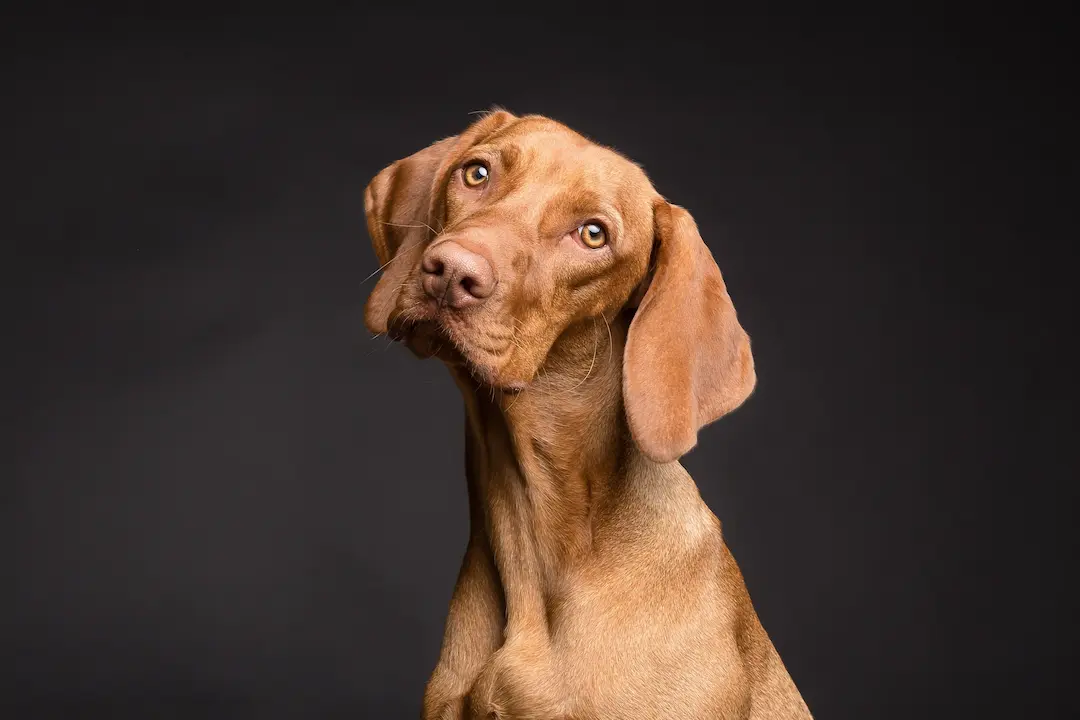
You say a word your dog recognizes, "walk", "treat", "outside", and their head swings to one side, ears perked, eyes locked on yours. It's one of the most universally loved dog behaviors, and it happens constantly.
But why does it happen? Turns out there are several solid reasons, and they say a lot about how dogs process the world.
They're Trying to Hear You Better
Dogs have a much wider range of hearing than humans, but pinpointing the exact source and nature of a sound is a different skill. When a dog tilts their head, they're adjusting the position of their outer ear (the pinna) to better funnel sound toward the ear canal and help them locate where a sound is coming from.
This is especially useful with voices. Human speech contains a huge amount of information packed into tone, pitch, and subtle variations, and dogs work hard to extract meaning from it. Tilting the head may help them isolate specific frequencies and pick out familiar words from the surrounding noise.
Think of it as fine-tuning. They heard something that might be important, and they're repositioning to catch more of it.
They're Trying to See Your Face
This one comes from a study that surprised a lot of people when it was published: dogs may tilt their heads partly because their muzzle gets in the way.
Dogs with longer muzzles have a portion of their lower visual field blocked by their snout. When they look at a human face straight on, the nose and muzzle can obstruct their view of the lower half, which is where a lot of emotional expression happens (the mouth, the jaw, the chin).
Tilting the head shifts the muzzle out of the sightline and gives them a clearer view of your face. Dogs with flatter faces (like Pugs and Bulldogs) tilt their heads less than dogs with longer muzzles, which supports this theory.
Dogs are extraordinarily attuned to human facial expressions. If tilting their head gives them better visual access to that information, it makes perfect sense they'd do it.
They Recognize That a Response Is Expected
Dogs are also social strategists. Over thousands of years of living with humans, they've become very good at reading what we want and responding in ways that get positive reactions.
The head tilt almost always gets a warm response from humans: we say "aww," we smile, we lean toward them, we often repeat whatever we said. Dogs notice this. If tilting their head consistently produces attention and positive engagement from you, they'll do it more.
This doesn't mean it's manipulative in a calculated sense. It's more that behaviors that get rewarded get reinforced, and the head tilt has been rewarded a lot.
They're Processing Something New or Confusing
Dogs often tilt their heads when they encounter a sound or word they half-recognize but aren't sure about. It's a sign of active attention and processing. They're working out what something means.
This is why the head tilt is especially common when you use words they almost know, or when you speak in an unusual tone. They're not confused in a bad way. They're engaged and trying harder to understand.
It Might Feel Good
Some researchers suggest the head tilt may also be a physical response to the vestibular system, the inner ear system that controls balance and spatial orientation. Tilting the head slightly may help dogs process certain sounds or sensations more comfortably.
This is harder to prove, but it fits with the observation that dogs sometimes tilt spontaneously at sounds with no obvious social or linguistic content.
Does Every Dog Tilt Their Head?
Not equally. A few factors affect how often you see it:
Muzzle length: Longer-muzzled dogs tend to tilt more than flat-faced breeds, likely because of the visual field benefit.
How engaged the dog is with human communication: Dogs who have a lot of verbal interaction with their owners and have learned more words tend to tilt more. A study found that dogs who could identify and retrieve toys by name (called "gifted word learner" dogs) showed significantly more head tilting than average dogs.
Age: Puppies tilt more as they're learning what sounds and words mean.
Individual personality: Some dogs are just more visually and verbally engaged with their humans than others.
When a Head Tilt Is Not Cute: It's a Medical Sign
Here's the important part: there is a type of head tilt that looks similar but is completely different, and it needs a vet.
A persistent, involuntary head tilt (where the head stays tilted to one side and doesn't straighten out) is a neurological or vestibular symptom, not a behavioral one. It's often accompanied by:
- · Loss of balance or falling to one side
- · Eyes moving rapidly back and forth (nystagmus)
- · Walking in circles
- · Nausea or vomiting
- · Disorientation
This can be caused by vestibular disease (a common and usually treatable inner ear condition in older dogs), an ear infection that has spread inward, a brain lesion, or other neurological issues.
Idiopathic vestibular disease (sometimes called "old dog vestibular syndrome") looks alarming: sudden onset, the dog can't walk straight, their head is tilted hard to one side. But it often resolves on its own within a few weeks. It's one of the most common causes of sudden neurological symptoms in older dogs and is not the emergency it looks like, though a vet visit is still important to rule out more serious causes.
If your dog's head tilt came on suddenly, doesn't go away, or is paired with any of the symptoms above, see a vet. Don't wait.
The regular playful head tilt when you say "walk"? That's just your dog being wonderful. The involuntary tilt that doesn't stop? That needs checking.
How to Get the Head Tilt on Demand
If you want to see it more, say something in a questioning tone that contains words they might recognize. Rising inflection, ending your sentence on a higher pitch like a question, seems to trigger it reliably.
Saying a familiar word followed by a new word works well too: "Want to go see... the..." and then pause on something unfamiliar. Their brain kicks into gear trying to fill in what's coming.
You can also try unusual sounds or whistling. Anything that's interesting but not immediately identifiable tends to produce the tilt as they work out what they're hearing.
The Bottom Line
The head tilt is your dog actively paying attention, trying to hear you better, see your face more clearly, figure out what you're saying, or process something new. It's a sign of a dog who is engaged and genuinely trying to understand you.
The fact that we find it adorable and reward it constantly probably means we see it more than we would otherwise. Which is fine. It's one of the best things dogs do.
Just know the difference between the curious, voluntary tilt and the involuntary neurological one. One is a delight, the other is a reason to call your vet.