
 Cat Care
Why Does My Cat Show Me Their Belly? (And Why You Shouldn't Touch It)
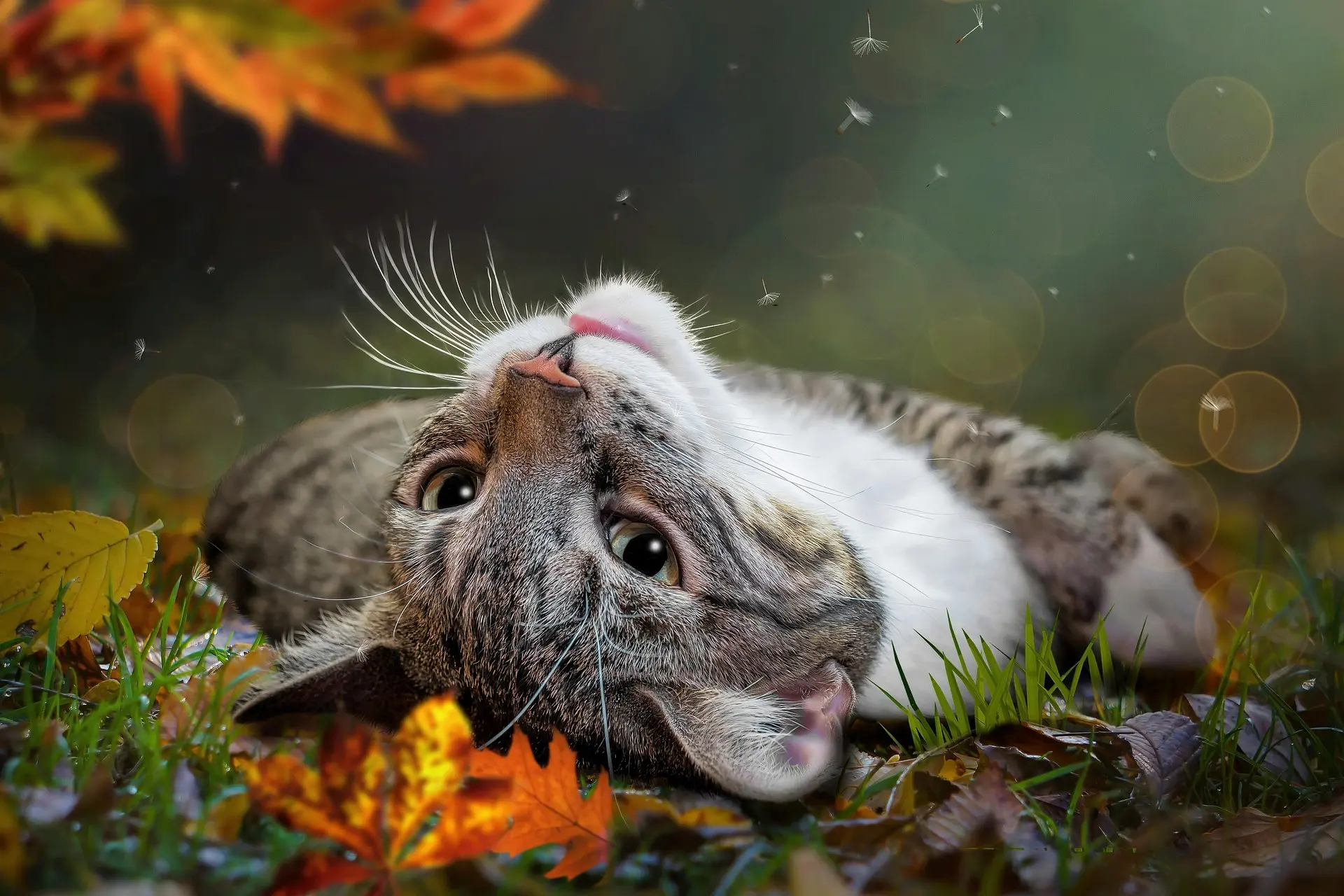
Your cat flops down in front of you, rolls onto their back, and presents their belly. Soft fur, completely exposed, eyes half-closed. It looks like the most obvious invitation imaginable.
You reach down. A split second later your hand is inside a trap made of claws and teeth.
This is one of the most universally experienced cat moments, and also one of the most misunderstood. The belly roll means something real. It just doesn't mean what it looks like.
The Belly Is the Most Vulnerable Spot
To understand why cats show their belly, you have to understand what it means physically. The abdomen is where vital organs are. In the wild, exposing it is a genuinely vulnerable act. A cat lying on their back is a cat who cannot run, cannot immediately defend themselves, and is showing the least protected part of their body.
When a cat rolls over and exposes their belly to you, they're communicating something about how safe they feel in that moment and with that person. It's a signal of trust, comfort, and relaxation, not necessarily a request to be touched.
It's a Greeting, Not an Invitation
One of the most common times you'll see the belly roll is when you come home. Your cat hears the door, runs over, and immediately flops down in front of you, belly up.
This is a greeting display. They're happy you're back. The roll is expressive, it's them saying something, but what they're saying is closer to "I'm glad you're here" than "please rub my stomach." The distinction matters enormously when you're deciding whether to reach down.
It Means They Trust You
Cats don't show their belly to people or animals they don't feel safe around. If your cat regularly rolls over in your presence, that's a genuine indicator of how they feel about you. You're safe. You're predictable. They can be vulnerable around you.
Some cats who are more anxious or less socialized will rarely or never do it, not because they don't trust their owner, but because full belly exposure doesn't feel comfortable to them regardless of the relationship. If your cat does it regularly, it's worth recognizing as an actual statement.
So Why Can't You Touch It?
Here's where people go wrong. The belly roll communicates trust and comfort. It is not, in most cats, an invitation for belly rubs. The two things look connected but they aren't.
The belly and the inner legs are highly sensitive areas packed with nerve endings. Even a gentle touch there can feel overwhelming or overstimulating very quickly. A cat who was perfectly relaxed two seconds ago can flip into self-defense mode the instant a hand contacts that area, not because they're being mean, but because the sensory input triggered an automatic response.
The grab-and-bite reaction you get when you touch a cat's belly is often called the "belly trap." It's not a trick. The cat didn't plan it. It's a reflex. The exposed belly triggered your instinct to touch it. The touch triggered their instinct to defend it. Two instincts collided and your hand lost.
Some Cats Do Actually Want Belly Rubs
This is where it gets complicated, because not all cats respond the same way. Some cats have been desensitized to belly contact through regular gentle handling from a young age, or they're just individually comfortable with it, and they genuinely enjoy a belly rub. If you have one of these cats, you know it because the response to touching their belly is positive: they relax, they lean into it, they may purr or knead.
The difference is context and the individual cat. A cat who truly wants belly contact will stay relaxed, keep their paws loose, and not tighten up when you touch them. A cat who is showing the belly as a greeting or trust display will often become tense or reactive the moment contact is made.
You learn which you're dealing with through experience with your specific cat.
How to Read Whether It's Okay to Touch
A few things to look for before you reach down:
Body tension: A relaxed, inviting belly comes with a loose, soft body. Legs slightly splayed, no tension in the paws. A cat who is about to trap you will often show subtle tensing, even with the belly exposed.
Eye state: Soft, half-closed eyes and slow blinking indicate a relaxed cat. Wide pupils or focused eyes suggest more arousal, which means the reflex is closer to the surface.
Tail: A still or slowly moving tail is calmer than a tail that's twitching or flicking.
Context: Did they just run over to greet you? Probably a greeting display, not a touch request. Have they been lying near you calmly for a while and just rolled over? Slightly more likely to be a comfortable, open moment.
Even with all of this, some cats will surprise you. The safest approach if you're not sure is to let the back of your fingers approach slowly and see how they respond before committing to a full belly contact.
The Defensive Belly Exposure Is Different
There's another belly presentation that looks similar but means the opposite. A cat who feels cornered or threatened may roll onto their back with all four paws up and claws out. This is not vulnerability or trust. This is a fighting position that gives them access to all four sets of claws plus their teeth at once.
The way to tell the difference is context and body language. A defensive belly posture comes with a tense body, wide pupils, flat or rotated ears, and often a low growl or hiss. A trusting belly roll comes with a relaxed body and often soft vocalizations or purring. One is an invitation to approach (cautiously). The other is a clear warning to stay back.
What to Do Instead
If your cat does the belly roll and you want to respond to the gesture without ending up with puncture wounds, a few things work well.
Verbal acknowledgment lands well with most cats. They made a social gesture and you responded to it. That completes the exchange without anyone getting hurt.
Gentle contact elsewhere, like the head, cheeks, or chin, is almost always safer. Most cats who are relaxed enough to show their belly are also happy to accept contact in areas they reliably enjoy.
If you want to work toward a cat who tolerates or enjoys belly contact, the approach is slow desensitization: brief, gentle touches paired with things they enjoy (treats, play, praise) repeated over time. It works for some cats, especially younger ones. It doesn't work for all of them, and that's fine.
The Bottom Line
When your cat shows you their belly, they're telling you they feel safe, comfortable, and happy in your presence. It's a genuine display of trust. The problem is that it looks exactly like an invitation to touch, and for most cats it isn't.
The belly roll is a statement, not a request. Appreciate it for what it is. If you want to touch the belly, read the individual cat carefully first, and accept that you may not always get it right.
Your cat will forgive you. They'll probably even do it again tomorrow.
If you want to track your cat's behaviors and moods over time, PawTrack lets you log observations and routines in one place so you can spot patterns and share them with your vet when it matters.
Related Reading
- · Understanding Cat Body Language: What Your Cat Is Really Telling You
- · Why Does My Cat Bite Me? Love Bites vs. Real Aggression
- · Why Do Cats Purr? What It Means and When to Pay Attention
- · Why Does My Cat Sleep On Me? What It Actually Means
- · Why Does My Cat Follow Me Everywhere?
- · Why Do Cats Knead? What the Behavior Actually Means