
 Cat Care
Why Does My Cat Sleep On Me? What It Actually Means
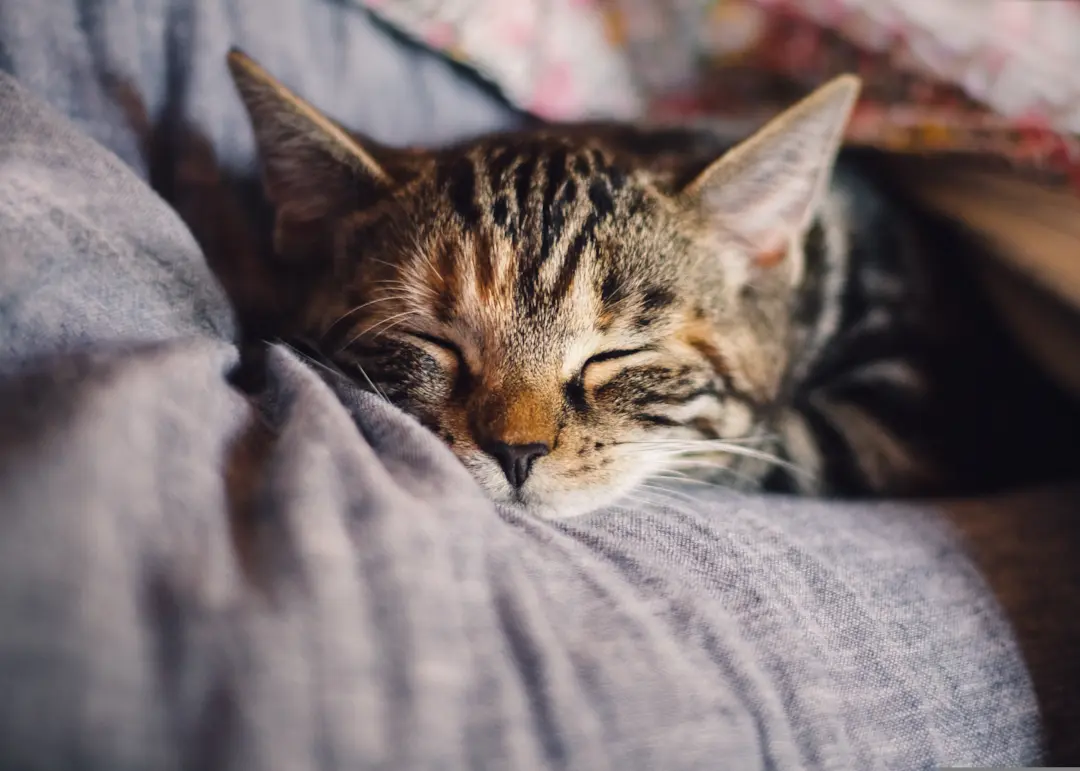
You bought them a bed. It's plush, it's exactly the right size, it's in a warm corner of the room. They slept in it once, decided it wasn't for them, and now they're a dead weight on your chest every night. Or maybe it's your legs. Or the back of your knees, which is somehow the most inconvenient location they could have chosen.
Cats who sleep on people do it consistently, often in the exact same spot, often with complete disregard for whether you are comfortable. And there are real reasons why.
You're Warm
The most direct answer is temperature. Cats run hotter than humans, with a normal body temperature between 100.5 and 102.5 degrees Fahrenheit, and they lose heat faster because of their size. They seek out warm spots constantly, which is why they sit in sunbeams, claim the warm side of the laptop, and drape themselves over the cable box.
You are a large, reliably warm surface that stays at a consistent temperature all night. From a pure comfort standpoint, you're better than most cat beds.
This doesn't mean warmth is the only reason. But it's worth knowing that even when it feels like a profound expression of trust, some of it is also just physics.
You're a Safe Place
Cats are both predator and prey animals. In the wild, being caught asleep in an exposed location is dangerous. So cats are careful about where they sleep, and they sleep deeply only in places where they feel genuinely safe.
When your cat chooses to sleep on you, they're telling you something about how they feel in your presence. You're not just warm, you're predictable. You don't make sudden movements, you don't threaten them, and your breathing and heartbeat are consistent. Sleeping on a person is actually a vulnerable position for a cat, and they don't do it with people they don't trust.
If your cat sleeps on you and stays there even when you shift or roll over, that's a meaningful signal. They've decided you're safe enough that even minor disruptions aren't worth leaving.
It's a Bonding Behavior
Cats in multi-cat households often sleep in contact with each other, a behavior called allogrooming and pillowing. It's part of how bonded cats maintain their relationship, reinforce group membership, and self-soothe.
A cat who sleeps on their person is extending that same social behavior across species. You've been incorporated into their social group, and this is what members of their group do. It's not that they think you're a cat, exactly. It's more that the behaviors they use to bond with cats they trust also apply to you.
Some cats do this more than others depending on how they were socialized as kittens. A cat raised with a lot of human contact in those early weeks tends to be more physically affectionate as an adult.
Your Scent Is Familiar and Calming
Cats navigate the world largely through smell. Your scent is one of the most familiar things in their environment, associated with food, safety, and positive experiences built up over time.
Sleeping somewhere that smells strongly of you, like your chest, your pillow, or the clothes you left on the bed, is comforting in a direct sensory way. This is also why cats sometimes sleep on things that belong to you when you're not home. They're not confused, they're using scent as a form of comfort when the actual person isn't available.
They Know Your Schedule
Cats are extremely attuned to routine. If you go to bed at roughly the same time most nights, your cat likely knows when that is and may start positioning themselves for the event before you've even gotten up from the couch.
Cats who sleep with their owners often time it precisely, appearing at bedtime and sometimes leaving before morning to do their own thing. They've figured out when the good sleeping is happening and have built it into their own routine.
If your cat shows up and settles onto you at the same time each night, that's not coincidence. That's a cat who has memorized your schedule.
Certain Spots Have Specific Meanings
Where your cat sleeps on you matters a bit.
On your chest or stomach: Close to your face, direct contact with your heartbeat and breathing. This is typically the most bonded position and tends to be where cats sleep who seek the most social connection.
On your legs or feet: Warm and stable, but with some distance. Common in cats who like being close but are also somewhat independent. Also the classic move for cats who want proximity without full commitment.
On your head or pillow: Often about scent as much as warmth. Your head produces a lot of body heat and your hair or pillow carries your scent strongly. Also gives them a slightly elevated position, which cats tend to prefer.
Pressed against your back or side: Body contact without being directly in your line of sight. Common in cats who want closeness on their terms.
None of these are better or worse. They just reflect different cat personalities.
Does It Mean Your Cat Loves You?
Probably yes, in the way cats experience that kind of thing. Cats don't use the same social signals dogs do, they're not demonstrative in obvious ways, and they don't need constant validation from their humans. So when a cat does seek out physical closeness consistently, it carries more weight than it might with a species that's always looking for attention.
Sleeping on you requires them to be vulnerable, to stay still, to tolerate your movement and noise, and to give up some control over their environment. A cat does that because the benefit of your company outweighs all of that. That's a reasonable working definition of affection.
Understanding cat body language more broadly helps make sense of these signals. A cat who sleeps on you and also slow-blinks at you, head-bumps you, and shows you their belly at some point is a cat who is comfortable and trusting in a fairly complete way.
What to Do If You'd Rather They Didn't
Some people love it. Some people can't sleep with a cat on them. Both are fine.
If you want to discourage it, consistency matters. Moving them off every time without making it a big event, just gently lifting and setting them aside, and having an appealing alternative nearby (a warm bed, a heated pad near yours) tends to work over time. What doesn't work is letting them sleep on you sometimes and not others. Cats respond to consistent outcomes, not inconsistent ones.
If you want them to do it more, the answer is also consistency. Staying still when they settle, letting them sleep undisturbed, and keeping bedtime routine predictable encourages the behavior.
The Bottom Line
Your cat sleeps on you because you're warm, safe, familiar, and part of their social world. It's a combination of practical comfort and genuine preference for your company. The fact that they choose you over every other surface in the house, including the expensive bed you bought them, says something real.
Even if that something also includes "you are a conveniently warm object." Cats contain multitudes.
Related Reading
- · Understanding Cat Body Language: What Your Cat Is Really Telling You
- · Why Do Cats Purr? What It Means and When to Pay Attention
- · Why Do Cats Sleep So Much?
- · Why Does My Cat Follow Me Everywhere?
- · Why Do Cats Knead? What the Behavior Actually Means
- · Why Do Cats Meow? What Different Vocalizations Mean