
 Cat Care
Why Does My Cat Lick Me? What It Means When Your Cat Grooms You
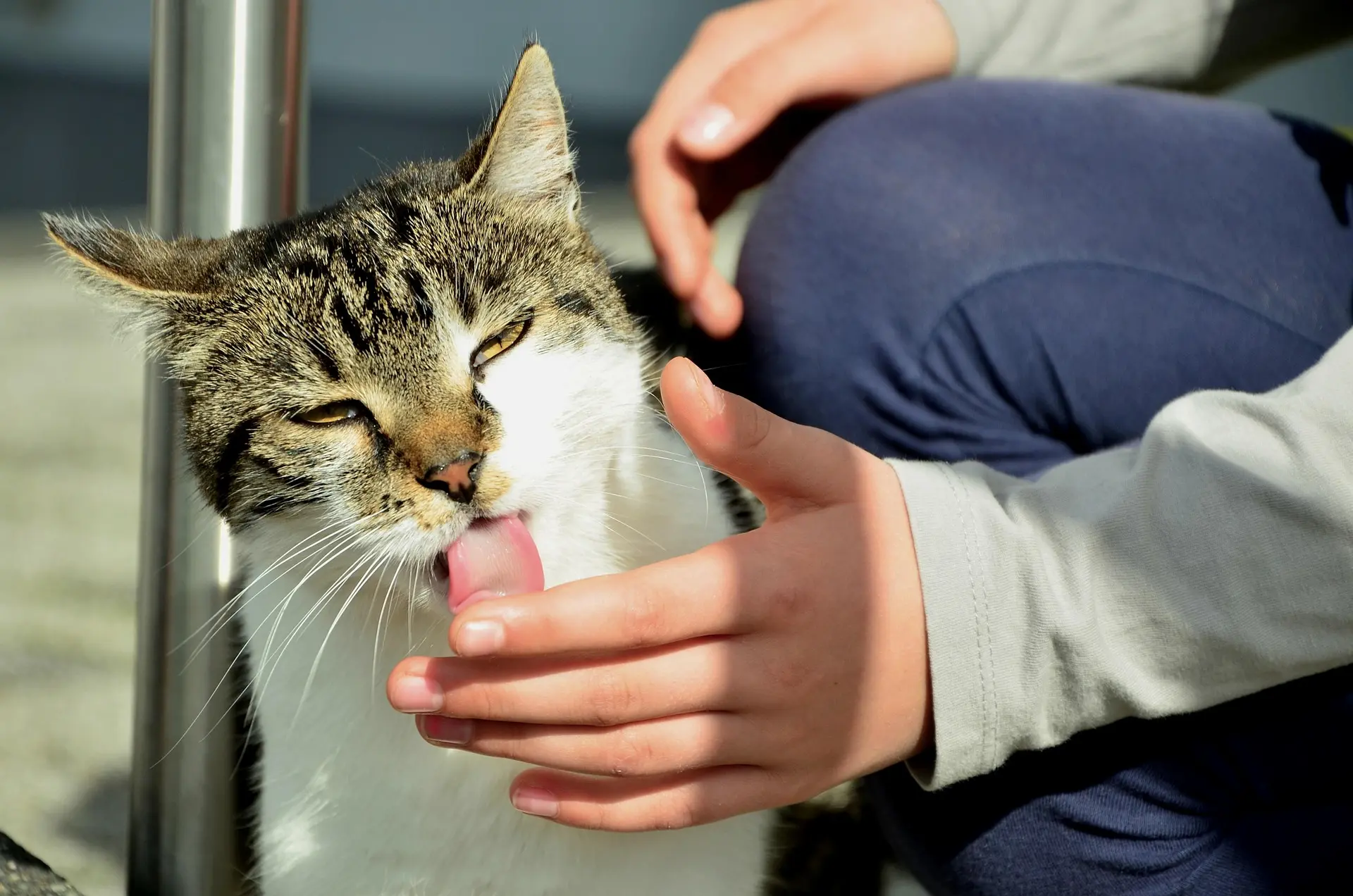
You're sitting on the couch and your cat climbs up, settles in, and then starts methodically licking your arm like you're covered in something delicious. You're not. You're just you.
The licking can feel intense because a cat's tongue genuinely is rough, covered in tiny backward-facing barbs called papillae that are designed to detangle fur and strip meat from bone. On your arm, they feel like sandpaper. Your cat doesn't know this is not a compliment in human terms. From their perspective, they're doing something kind.
They're Grooming You
The most common reason cats lick their people is social grooming, called allogrooming. In multi-cat households, bonded cats groom each other regularly. They clean the spots that are hard to reach, like the top of the head and behind the ears, and the act reinforces their social bond.
When your cat licks you, they're extending that same behavior to you. You're in their group. You're one of theirs. They're cleaning you the way they would clean a cat they care about.
The fact that you don't actually need grooming is irrelevant to them. The impulse is social and affectionate, not practical.
They're Telling You Something About the Relationship
Cats don't groom just anyone. Allogrooming is reserved for cats they're bonded with, which is a relatively small group. If your cat is licking you, you've made that list.
For cats who are more reserved or independent, this is a significant statement. A cat who doesn't sit in your lap or seek out petting but does occasionally lick your hand is still communicating real attachment, just in their own way.
They Like Your Taste or Smell
Cats are intensely sensitive to scent and taste, and they're often drawn to specific things on your skin. Sweat contains salt and trace amounts of minerals, which many cats find genuinely appealing. Lotions, food residue, and even the scent of other animals on your hands can prompt licking.
If your cat goes directly for your hands after you've been cooking, handling another animal, or applying something scented, this is probably the reason rather than affection. The licking is investigative and taste-driven rather than social.
It still doesn't mean anything bad. It's just a different motivation.
It's a Comfort Behavior
Cats who were orphaned or weaned early sometimes develop licking as a self-soothing habit. The act of licking, of nursing, is associated with comfort and safety from the earliest weeks of life. A cat who licks you, especially while kneading or purring, may be reaching back to that early sense of security.
This type of licking tends to be more rhythmic and persistent than social grooming. It often comes with other comfort behaviors like kneading, purring loudly, and settling into a fixed spot against your body.
It's harmless in itself, though in cats who were weaned very early, it can sometimes extend to licking fabrics, wool, or themselves excessively, which is worth watching.
They're Responding to Your Stress or Emotional State
Cats are more attuned to human emotional states than most people give them credit for. Some cats increase grooming behavior when their person is upset, anxious, or unwell. Whether they're responding to a change in your body chemistry, your body language, or your behavior patterns isn't fully established, but many owners notice the correlation.
If your cat tends to appear and start licking you during or after particularly stressful moments, they may be attempting to comfort you in the only way they know how. The fact that cat-tongue-on-skin isn't most humans' idea of stress relief doesn't diminish the intent.
When Licking Becomes Excessive
Occasional licking is normal and usually positive. Constant, compulsive licking of you, themselves, or objects can indicate a problem.
Overgrooming of themselves: If your cat is licking their own fur to the point of creating bald patches or raw skin, it's often anxiety-driven or related to skin irritation, allergies, or pain. This is different from licking you and warrants a vet visit.
Licking you obsessively and persistently: If your cat licks you for extended periods without stopping, seems unable to disengage, or does it compulsively regardless of context, it can indicate anxiety or compulsive disorder rather than affection. Occasional long grooming sessions are fine; the concern is when it seems like something your cat can't stop doing.
New licking behavior in an older cat: A change in behavior in a senior cat, including suddenly becoming more orally fixated, can sometimes point to neurological changes, cognitive decline, or discomfort. Worth mentioning to a vet if it's new and unexplained.
How to Respond When You'd Rather They Didn't
If the rough tongue on your skin bothers you, you can redirect without hurting the relationship.
The key is not to react negatively to the licking itself, since that can be confusing to a cat who is doing something they consider kind. Instead, gently move your hand or arm away when the licking starts, and offer them an alternative. Pet them, offer a toy, or redirect their attention elsewhere. Over time, most cats will shift when the licking consistently stops their access to you.
What doesn't work is reacting strongly, pushing them away abruptly, or making the moment unpleasant. That just makes the interaction confusing for them without teaching anything useful.
If you want to log your cat's grooming behaviors and track whether licking is increasing over time, PawTrack lets you record observations so you have a baseline to reference if something shifts.
The Bottom Line
Your cat licking you is almost always a positive sign. It means they've placed you in their social group, they feel safe around you, and they're doing something that, from their perspective, is genuinely caring. The sandpaper texture is just part of the deal.
If the licking is occasional and paired with other relaxed, affectionate behavior, enjoy it for what it is. Your cat considers you one of theirs. That's not nothing.
Related Reading
- · Understanding Cat Body Language: What Your Cat Is Really Telling You
- · Why Do Cats Purr? What It Means and When to Pay Attention
- · Why Do Cats Knead? What the Behavior Actually Means
- · Why Does My Cat Sleep On Me? What It Actually Means
- · Why Does My Cat Follow Me Everywhere?
- · Why Does My Cat Bite Me? Love Bites vs. Real Aggression