
 Cat Care
Why Do Cats Sit in the Loaf Position? What It Actually Means
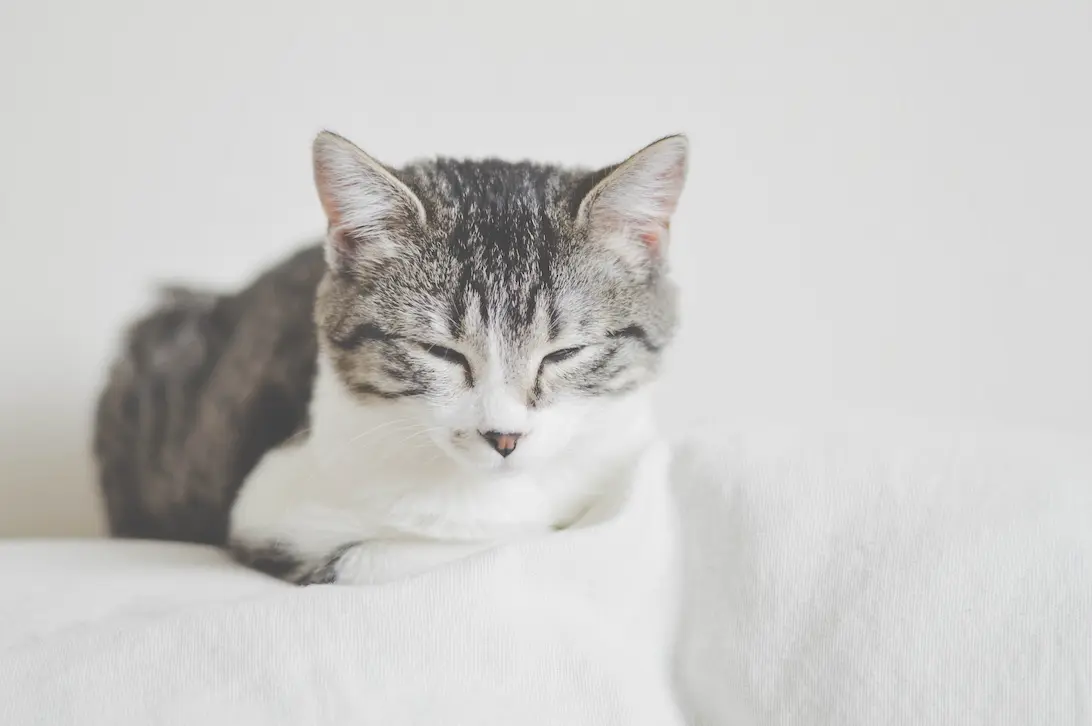
Your cat has settled into a perfect rectangle. Paws fully tucked under. Tail wrapped around the side. Head level. They look like they were built this way, like someone pressed a "compact mode" button and this is the result.
This is the loaf. It's one of the most photographed cat positions on the internet, and it's also one of the most informative, if you know what to look for.
It's a Comfort and Warmth Position
The most immediate reason for the loaf is thermal. Cats lose body heat from their extremities, and tucking their paws under their chest conserves that heat. The loaf position brings the body into a compact shape that retains warmth efficiently.
You'll notice cats loaf more often in cooler weather, on surfaces that aren't particularly warm, or when they're settling in for a longer rest. The position is essentially a cat optimizing their heat retention without fully going to sleep.
It's also simply comfortable. The paws folded under the chest removes the need to hold the legs in any active position. The cat's weight is distributed evenly. It requires no muscle engagement to maintain. For a cat who wants to rest but isn't committed to a full lying-down sleep, it's an efficient posture.
It Signals Relaxed Alertness
The loaf is interesting because it occupies a specific middle ground between active and fully asleep. A loafing cat has their paws tucked but their head is up, their eyes are often partially open, and they're aware of what's happening around them.
This is the key: the loaf is not a fully vulnerable position. A sleeping cat on their side has committed to deep rest. A loafing cat is resting but can spring upright instantly if needed. The paws are right there, ready to engage.
It's a posture that says: I am comfortable and I feel safe, but I'm not completely off guard. For a prey animal, that combination makes sense. Rest as much as possible, waste no energy, but stay ready.
This is also why cats loaf in the middle of a room, on counters, or in spots with good sightlines. They're choosing to rest where they can see what's happening. The loaf isn't just about the position itself, it's about choosing to be semi-alert rather than fully asleep.
It Means They Feel Safe With You
A cat will not loaf somewhere they don't feel comfortable. The position requires a degree of environmental trust. If a cat is anxious, uncertain about a space, or feel threatened, they'll stay in a more ready posture with paws down or sit in a defensive position rather than tucking everything under.
When your cat loafs near you, in your presence, in a shared space, it's a quiet indicator that they feel settled and secure in that environment. They're not performing calm. They've found a resting state that requires trust in their surroundings to maintain.
This is less dramatic than some affection signals, but it's reliable. A cat who consistently loafs in your presence is a cat who is genuinely comfortable with you.
The Perfect Loaf vs. The Sloppy Loaf
Cat owners who pay attention often notice there's a spectrum. The perfect loaf has all four paws completely tucked, symmetrical, tail neatly around the side, head centered. The sloppy loaf has one or two paws peeking out, tail in a loose position, body slightly asymmetrical.
The sloppy loaf usually just means the cat settled quickly or shifted mid-loaf. It carries the same general meaning. Some cats are simply less tidy loafers than others.
A partial loaf, where the cat is sitting with front paws tucked but back legs are still visible or slightly extended, is sometimes called the "potato" or "half loaf." Same general posture, same general comfort signal, just less complete.
When the Loaf Is Something to Watch
For the vast majority of cats, loafing is entirely normal and healthy. There is one context where it's worth paying closer attention.
A cat who is loafing constantly, won't leave the position, seems reluctant to move, or who loafs in an unusual way with their weight shifted to one side may not just be comfortable. They may be managing pain or discomfort.
Cats instinctively hide illness and pain. When a cat is not feeling well, they often tuck into a compact position because it's easier to hold still than to move around. The loaf position allows a cat to stay stationary with minimal effort. A cat who is sick, in pain from arthritis or internal issues, or is nauseous may appear to be simply resting when something else is going on.
Signs that a loaf might be a concern rather than comfort:
- · The cat isn't moving much across the whole day
- · They're less interested in food, play, or interaction
- · The position looks tense or hunched rather than relaxed and flat
- · There's a pressed, tucked quality with ears slightly back and eyes partially closed in a pained rather than sleepy way
- · The cat reacts when touched in a specific area
A comfortable loaf looks open and soft. An uncomfortable loaf looks closed and tense. Once you've seen both, the difference is usually readable.
If your cat's loafing pattern changes, they're doing it far more than usual, or it's accompanied by other behavioral shifts, it's worth logging what you're seeing and when it started. PawTrack lets you track behavioral observations over time so you have a clear picture to share with your vet rather than trying to remember when things first changed.
The Bottom Line
When your cat sits in the loaf position, they're telling you they're comfortable, warm, and at ease in their environment, resting but not fully asleep, settled but still aware. It's a posture of contented semi-alertness, and the fact that they're doing it around you says something about how safe they feel.
Enjoy it. Take the photo. The internet was built for exactly this.